A Toy Born in Dad's Hotel: Lincoln Logs
A son who followed his architect father to Tokyo got an idea on the building site: notched little logs that lock together into a cabin. It became one of the toys American children wanted most in the 1920s.
Around 1916, young John Lloyd Wright was helping his father in Tokyo. His father was the famous architect Frank Lloyd Wright, who was building the Imperial Hotel there.
The hotel had a special foundation: timber beams that interlocked so the building could ride out earthquakes. Watching it go up, the son thought, what if children could build houses like this, locking logs together?
A log cabin in a box
Back in America he formed a toy company and in 1918 began selling small notched logs. He named them Lincoln Logs, after Abraham Lincoln, who was born in a log cabin; the box included plans to build Lincoln's cabin. On August 31, 1920, he received U.S. Patent 1,351,086 for a "Toy-Cabin Construction."
Lincoln Logs
- Idea: about 1916, at the Imperial Hotel site in Tokyo
- On sale: 1918
- U.S. Patent 1,351,086: August 31, 1920
- Imperial Hotel: one of the few Tokyo buildings to survive the 1923 Great Kanto Earthquake
- National Toy Hall of Fame: 1999
His father's hotel became one of the few Tokyo buildings left standing after the 1923 earthquake. The son's toy, a hundred years on, is still building cabins in children's hands.
Sources
- Lincoln Logs (Wikipedia: John Lloyd Wright, Imperial Hotel, 1918 sales, Patent 1,351,086, 1999 Hall of Fame)
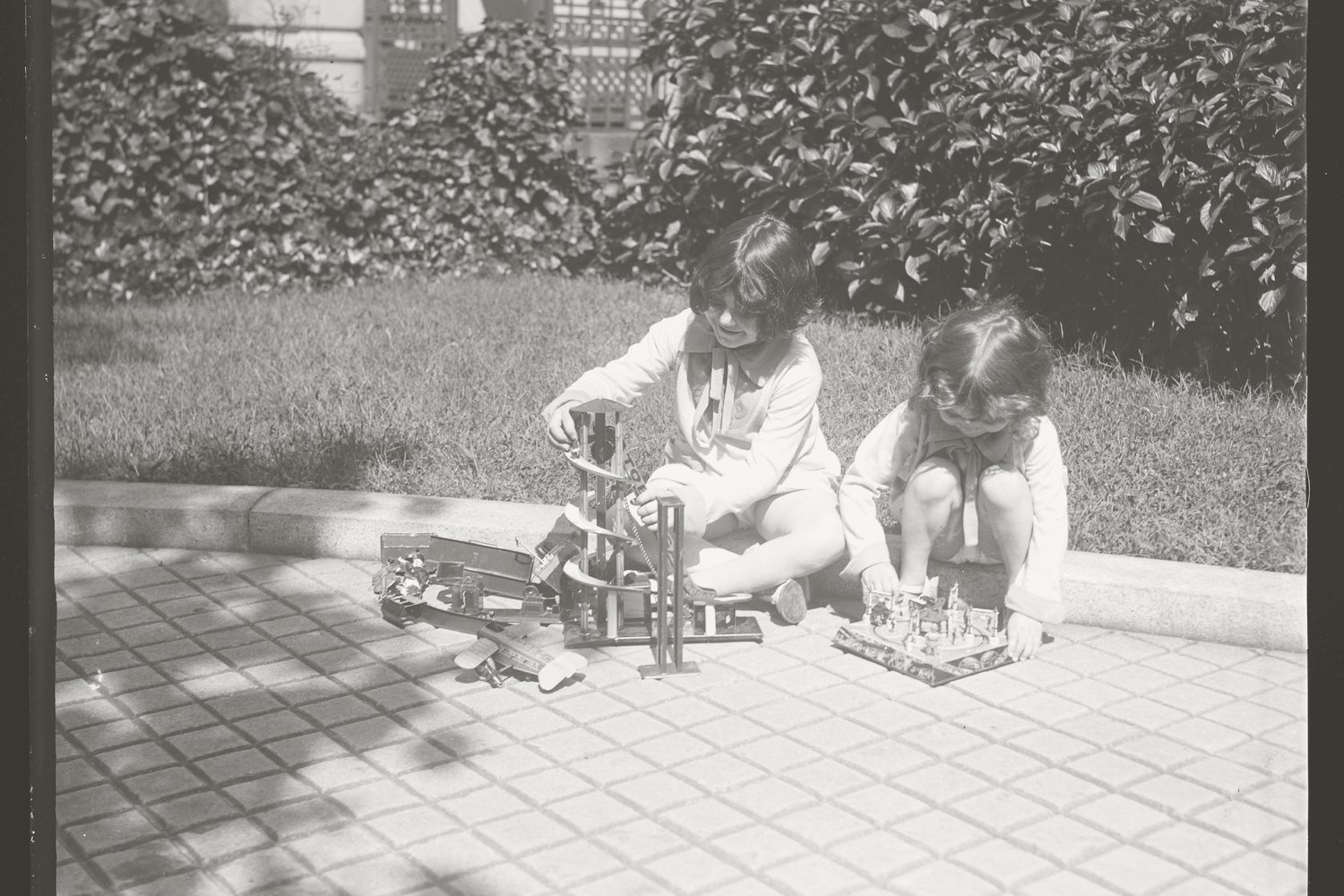
- Library of Congress: children playing with toys (about 1927)
Dollar conversions use the U.S. Bureau of Labor Statistics CPI-U (1926 annual average 17.7; September 2026: 336.94), a factor of about 19.